Domain & DNS Services
Business Domain & DNS Management
Business domain and DNS management covering record configuration, email dependencies, websites, subdomains, transfers and business continuity.
Independent service provider
Infinity Techiez is an independent IT services provider and is not affiliated with, endorsed by or sponsored by any email, hosting or technology platform vendor referenced on this page. All trademarks and brand names are the property of their respective owners.
What this service covers
Your domain name and DNS configuration sit underneath almost every digital service your business uses. Email delivery, website availability, hosted applications and verification records all depend on DNS being correct. When DNS is misconfigured, the symptoms surface elsewhere — undelivered email, unreachable websites or broken services — which makes the root cause easy to miss.
Infinity Techiez provides business domain and DNS management as an independent technology services provider. We help organizations register, configure, transfer and maintain their domains, and we manage the DNS records that connect those domains to email, websites and other services. Our role is to keep this layer accurate, documented and under your control.
- Service category
- Domain & DNS
- Best suited for
- Businesses that need domains connected to email and websites correctly
- Core service
- Domains & DNS
What we help with
Practical assistance for the areas that matter most to your business.
DNS record configuration
Create and maintain A, AAAA, CNAME, MX, TXT and other record types that connect your domain to the services it uses.
Nameserver management
Point domains at the correct DNS provider and coordinate nameserver changes without breaking dependent services.
Email dependencies
Align MX, SPF, DKIM and DMARC records so business email delivers reliably and passes authentication checks.
Website and hosting records
Connect domains and subdomains to websites, hosting platforms and applications with the right records.
Subdomain setup
Configure subdomains for portals, applications, staging environments or regional services as your needs grow.
Domain transfers
Plan and execute registrar or DNS provider transfers while protecting uptime for email and websites.
Domain portfolio administration
Track renewals, registrant details and access across multiple domains so nothing lapses unexpectedly.
DNS troubleshooting
Diagnose resolution failures, propagation delays and conflicting records that disrupt email or site access.
Everyday email tasks we handle
The most common email jobs businesses ask us about — from provider migrations to fixing delivery problems.
Email migration between providers
Move mailboxes between providers — for example comcast.net to Yahoo Mail, or ISP email to a business platform — keeping messages, folders and contacts intact.
Bulk email deletion & cleanup
Remove large volumes of old or unwanted messages safely, free up mailbox storage and organize folders without losing anything important.
IMAP / POP server setup
Configure IMAP or POP incoming mail settings correctly so email syncs reliably across webmail, desktop and mobile.
Email client setup
Set up Outlook, Apple Mail, Thunderbird, mobile mail apps and webmail with the right server, port and security options.
Email not receiving
Diagnose why messages are not arriving — DNS or MX record problems, full mailboxes, filters, blocked senders or server-side issues.
Email not sending
Fix outgoing mail failures — SMTP settings, authentication errors, port blocks, sending limits and reputation problems.
Domain MX record setup
Create or correct MX, SPF, DKIM and DMARC records so mail for your domain routes to the right servers and passes authentication checks.
Email forwarding setup
Configure forwarding, aliases and catch-all addresses so messages reach the right mailbox — and review forwarding before migrations.
Key benefits
What you can expect from this service.
Why DNS sits under everything
DNS translates your domain names into the addresses that services actually use. A single business domain typically carries records for the website, inbound email routing, outbound email authentication, verification tokens for third-party platforms and subdomains for applications. Each record is small, but together they form the map that keeps your services reachable.
Because DNS is shared infrastructure, a change intended for one service can break another. Replacing a zone file during a website migration can silently remove MX and TXT records, stopping email entirely. Managing DNS as a coordinated system — rather than a collection of one-off edits — is what prevents those outages.
Records we configure and maintain
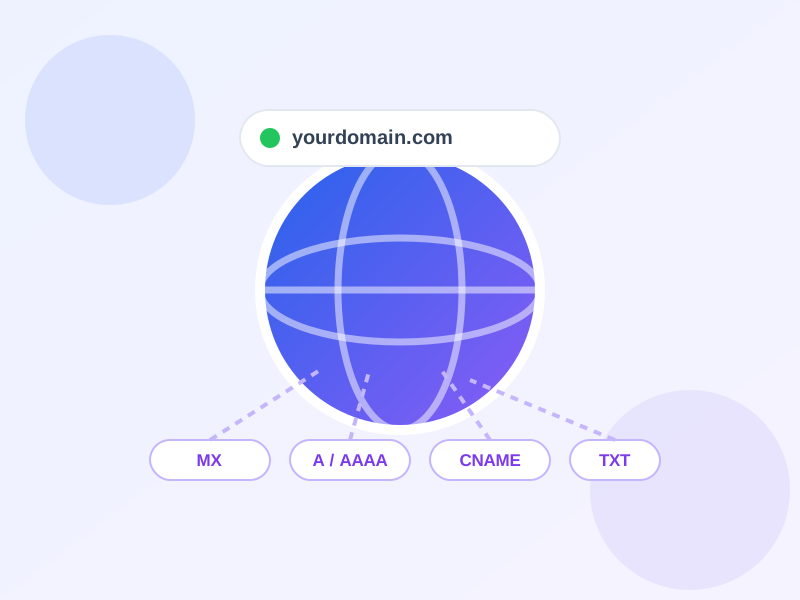
A and AAAA records point hostnames at IPv4 and IPv6 addresses, typically for websites and servers. CNAME records alias one hostname to another, which is common for hosted platforms and content delivery services. MX records direct inbound email to the correct mail servers, and TXT records carry SPF policies, DKIM keys, DMARC policies and domain verification tokens.
Each record type has rules and dependencies. CNAMEs cannot coexist with other records on the same name, MX records must reference hostnames rather than raw addresses in most configurations, and SPF has a lookup limit that can silently fail when too many sending services are included. We manage these details so the records work together.
Transfers, TTL and propagation
Domain transfers involve two layers: the registrar that owns the registration and the DNS provider that hosts the zone. Moving either layer requires planning. Lowering TTL values before a change shortens the time resolvers cache old answers, and pre-creating the full record set at the destination prevents gaps during cutover.
Propagation is not instantaneous because resolvers worldwide cache DNS answers for the duration of each record's TTL. We plan changes around these mechanics, verify resolution from multiple vantage points after cutover, and keep the old configuration available until the new one is confirmed stable.
DNS as part of business continuity
An expired domain or locked registrar account can take email and websites offline for days. Business continuity for domains means knowing where each domain is registered, who controls the account, which email address receives renewal notices and how DNS is backed up or replicated.
We document registrar access, renewal dates, nameserver assignments and the full record inventory so the organization retains control even when staff or vendors change. Where appropriate, we also help enable registrar locks, DNSSEC and multi-factor authentication on the accounts that control this layer.
Common business scenarios
Situations where this service is most useful.
New domain setup
A business registers a new domain and needs it connected to email, a website and supporting services correctly from the start.
Email depending on DNS
Email delivery fails or messages are flagged as spam because MX, SPF or DKIM records are missing, stale or inconsistent.
Website or hosting change
A company moves its website to a new host and needs A and CNAME records updated without breaking email on the same domain.
Domain transfer
An organization wants to move a domain to a different registrar or consolidate DNS management under one provider.
Adding subdomains
A growing business needs subdomains for a client portal, application or marketing site alongside its primary domain.
Continuity planning
A business realizes nobody knows where domains are registered, who controls the registrar account or when renewals are due.
Technical considerations
Details that affect reliability, timing and deliverability.
Map hostnames to IPv4 and IPv6 addresses for websites and servers; keep them aligned when infrastructure changes.
CNAMEs cannot share a name with other records and cannot be used at the zone apex in standard DNS; plan alternatives like ALIAS where supported.
MX records direct inbound mail; priority values and hostname targets must match the email provider's requirements exactly.
TXT records carry SPF, DKIM, DMARC and verification tokens; the SPF ten-lookup limit is a common failure point.
Changing nameservers transfers zone control; the full record set must exist at the new provider before delegation changes.
TTL controls how long resolvers cache answers; lowering it ahead of planned changes reduces cutover risk.
Security considerations
Measures that help protect accounts, data and domain reputation.
Restrict who can access registrar and DNS accounts, and enable multi-factor authentication on both.
Use registrar locks to block unauthorized transfers, and review lock status as part of periodic audits.
Monitor DNS for unexpected modifications, especially to MX records that could redirect email.
Consider DNSSEC signing to protect resolvers from forged answers, where your DNS provider supports it.
How we work
A clear, transparent approach from initial review to handover.
Audit
Inventory domains, registrars, nameservers and existing DNS records across the organization.
Map
Document which services depend on each record — email, websites, applications and verifications.
Plan
Sequence changes, transfers or consolidations with TTL adjustments and rollback options.
Implement
Apply record changes, nameserver updates and transfer steps in the planned order.
Verify
Confirm resolution, email delivery and site availability from multiple locations.
Maintain
Track renewals, review records periodically and update documentation as services change.
Who this is for
Organizations and situations where this service is most useful.
Related services
Core Infinity Techiez services and related pages.
Frequently asked questions
Practical answers about this service.
Need help with domain or DNS management?
Tell us about your domains and the services that depend on them, and we can recommend a practical approach to configuration or cleanup.